
August 13, 2026
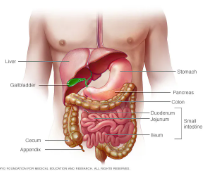
image of small intestine
Symptoms of Crohn’s disease typically include:
- Diarrhea.
- Fever.
- Fatigue.
- Belly pain and cramping.
- Blood in the stool.
- Mouth sores.
- Reduced appetite and weight loss.
- Pain or drainage near or around the anus due to inflammation from a tunnel into the skin, called a fistula.
Crohn’s disease can affect any part of the small or large intestine. It may involve multiple segments, or it may be continuous. It most commonly involves the last part of the small intestine. In some people, the disease is only in the colon or the large intestine.
Symptoms of Crohn’s disease can range from mild to severe. They usually develop gradually, but sometimes might come on suddenly, without warning. Someone with Crohn’s disease also may have periods of time with no symptoms. This is known as remission.
Other symptoms
People with severe Crohn’s disease also may experience symptoms outside of the intestinal tract, including:
- Inflammation of skin, eyes and joints.
- Inflammation of the liver or bile ducts.
- Kidney stones.
- Iron deficiency, called anemia.
- Delayed growth or sexual development, in children.
When to see a doctor
See a healthcare professional if you have ongoing changes in your bowel habits or if you have any symptoms of Crohn’s disease, such as:
- Belly pain.
- Blood in the stool.
- Nausea and vomiting.
- Diarrhea lasting more than two weeks.
- Losing weight without trying.
- Fever in addition to any of the above symptoms.
Stay in the loop
Get new articles as they publish
Join our community and we will send trusted education and updates for your condition.